
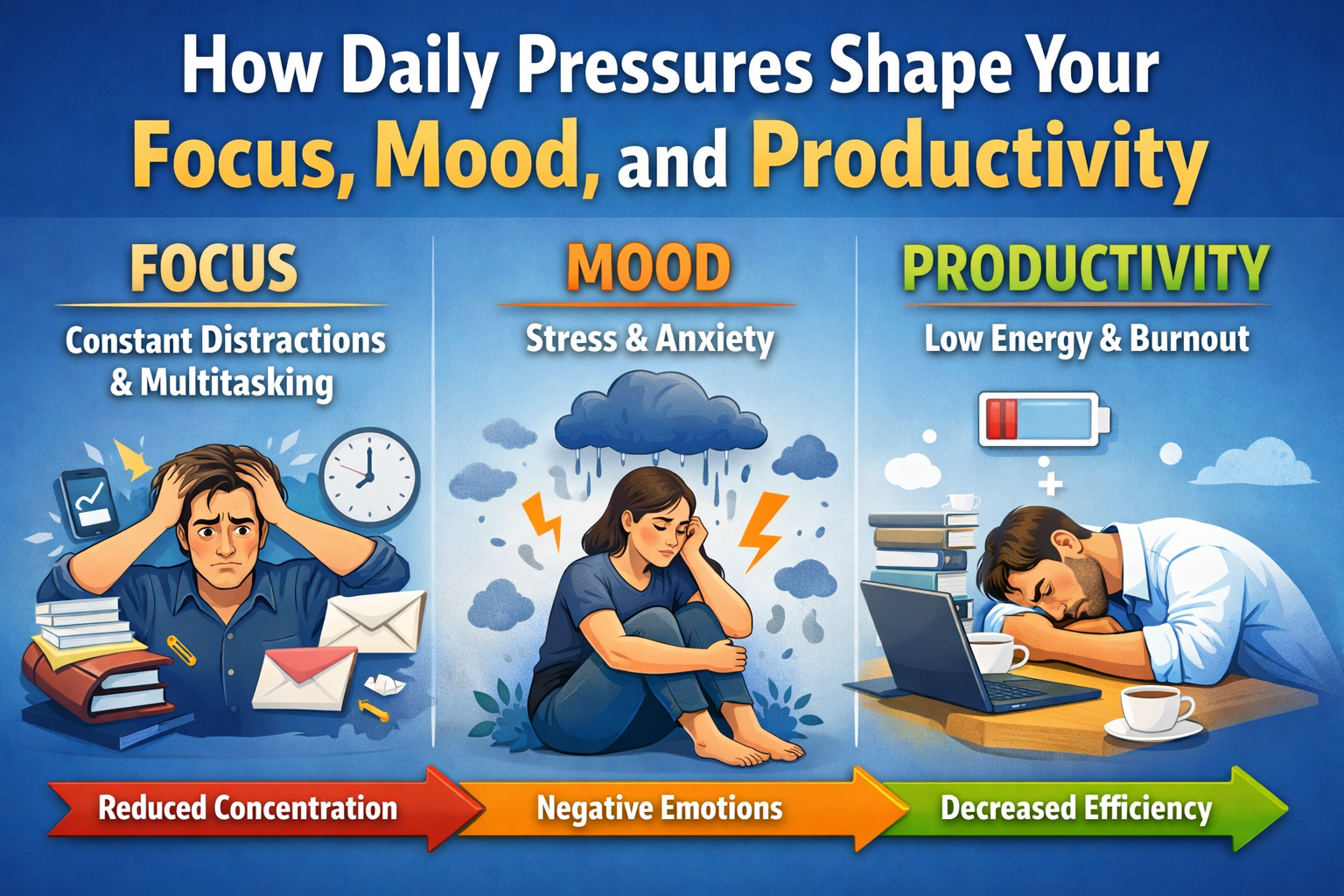
How Daily Pressures Shape Your Focus, Mood, and Productivity
Stress is a natural part of life. Deadlines, responsibilities, social interactions, and constant digital notifications can all create pressure throughout the day. While short-term stress can sometimes increase motivation and alertness, ongoing daily stress may gradually influence focus, emotional balance, and overall quality of life.
One of the most noticeable effects of everyday stress is reduced concentration. When the mind is preoccupied with multiple demands, it becomes harder to prioritize tasks and think clearly. This can lead to simple mistakes, slower decision-making, and mental fatigue. Over time, frequent mental strain may lower overall productivity, even when effort remains high.
Stress also affects mood. People experiencing persistent daily pressure may feel more irritable, impatient, or emotionally drained. These emotional shifts can impact relationships at home and work, sometimes creating misunderstandings or tension. Recognizing these patterns early allows individuals to make small adjustments before stress becomes overwhelming.
Healthy coping strategies play an important role in maintaining balance. Structured routines, realistic goal setting, and regular short breaks during work hours can help reduce mental overload. Even simple habits—such as stepping outside for fresh air or practicing brief breathing exercises—can support mental clarity.
Digital boundaries are another key factor. Constant connectivity can intensify stress by creating the expectation of immediate responses. Setting specific times to check messages and limiting unnecessary notifications may improve focus and reduce mental pressure.
Sleep quality is closely connected to daily stress levels. A consistent bedtime routine, reduced screen exposure in the evening, and a calm sleep environment can support recovery and help the body and mind reset.
Understanding everyday stress does not mean eliminating challenges altogether. Instead, it involves building awareness and responding with practical, sustainable habits. Small, consistent changes often have a meaningful impact on long-term well-being and overall life satisfaction.
