
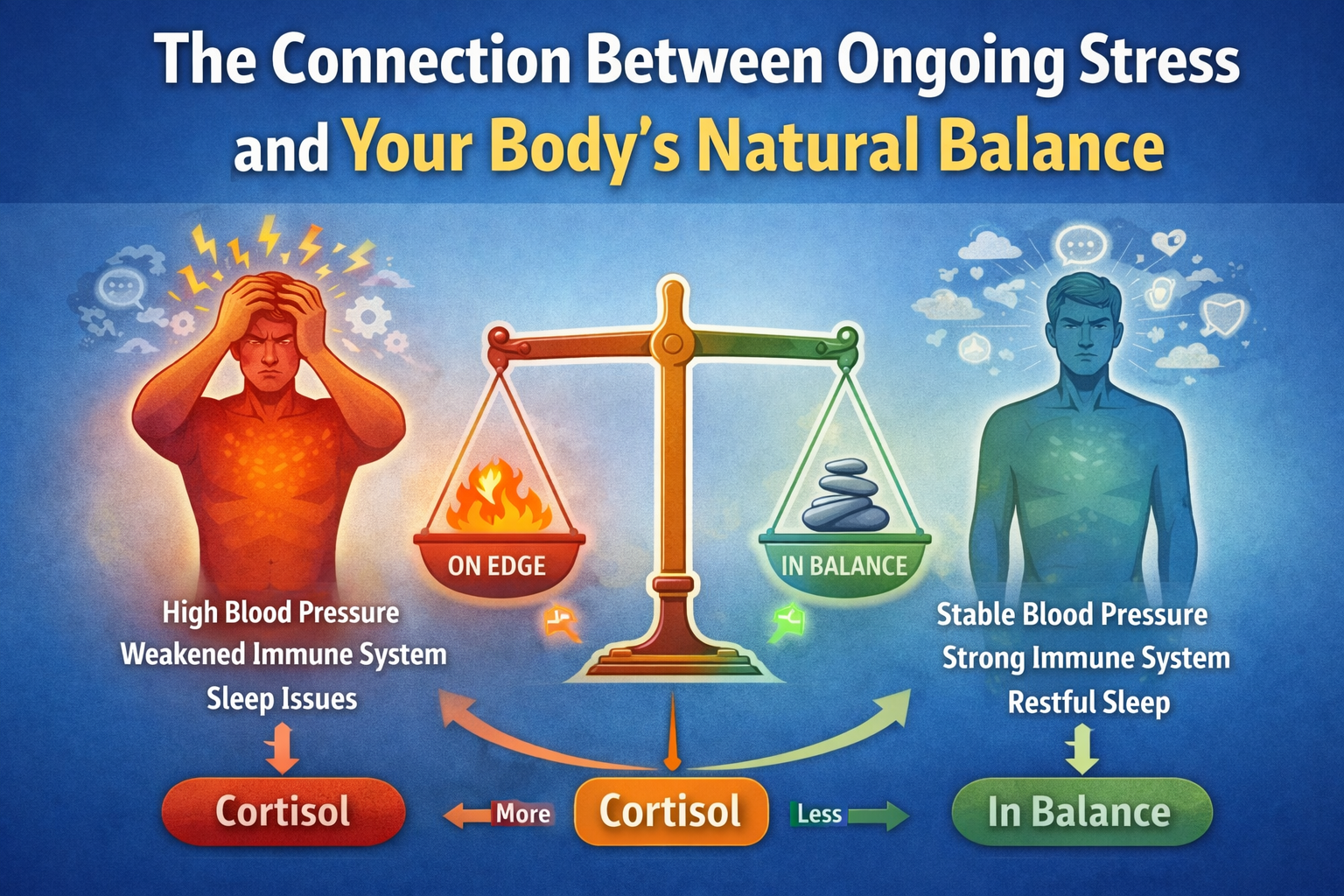
The Connection Between Ongoing Stress and Your Body’s Natural Balance
Stress is often thought of as a mental experience, but it also has physical dimensions. When the body perceives pressure, it activates a natural response designed to help manage short-term challenges. While this response is useful in brief situations, prolonged activation may influence physical comfort and energy levels.
One common effect of ongoing stress is muscle tension. Many people unconsciously tighten their shoulders, neck, or jaw when under pressure. Over time, this tension may contribute to stiffness and general discomfort. Gentle stretching, posture awareness, and regular movement breaks can help maintain physical ease throughout the day.
Sleep patterns are also closely connected to stress levels. When the mind remains active late into the evening, it may become harder to relax and fall asleep. Consistent sleep routines, calming pre-bedtime activities, and limiting stimulating content before bed can promote better rest and recovery.
Energy levels may fluctuate when stress becomes persistent. Some individuals report feeling mentally exhausted even if they have not engaged in intense physical activity. Balanced nutrition, adequate hydration, and light physical activity—such as walking or yoga—can support stable energy throughout the day.
Digestive comfort may also be influenced by emotional strain. Mindful eating practices, regular meal timing, and reducing rushed eating habits may help support digestive well-being. Creating a calm eating environment can make a noticeable difference.
Physical activity remains one of the most accessible ways to support the body during stressful periods. Moderate exercise encourages circulation, supports mood balance, and helps release accumulated tension. Activities do not need to be intense; consistency is more important than intensity.
Maintaining physical well-being during stressful periods is less about drastic changes and more about steady habits. By listening to early signs of tension and responding with supportive routines, individuals can help preserve their body’s natural balance over time.
