
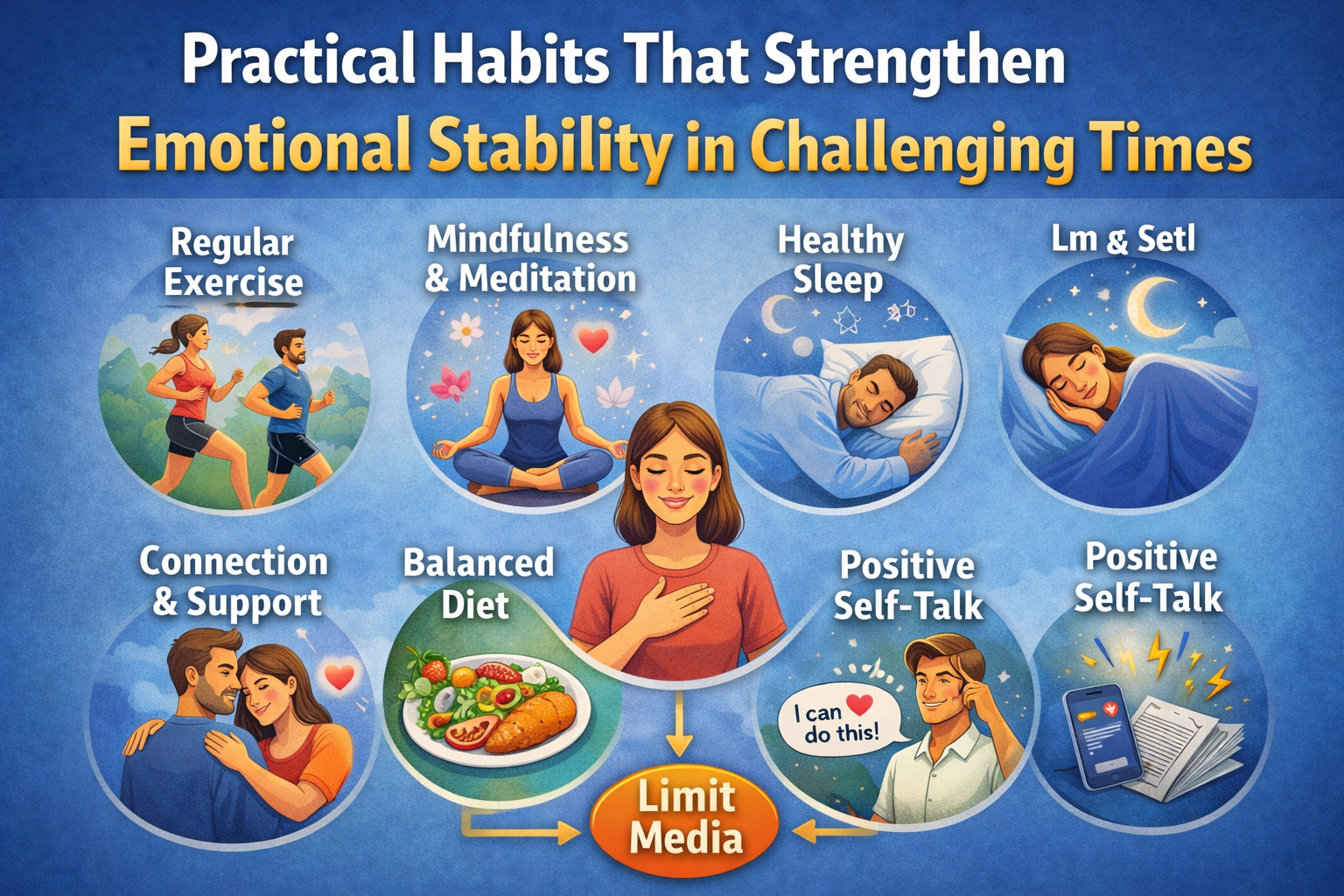
Practical Habits That Strengthen Emotional Stability in Challenging Times
Emotional resilience refers to the ability to adapt to challenges, recover from setbacks, and maintain perspective during difficult moments. It does not mean avoiding stress entirely. Instead, resilience involves developing habits that support steady emotional responses.
One important factor in emotional resilience is self-awareness. Recognizing emotional patterns allows individuals to respond thoughtfully rather than react impulsively. Simple practices such as journaling or reflecting on daily experiences can increase this awareness over time.
Mindfulness techniques are widely used to support emotional balance. Paying attention to breathing, physical sensations, or present-moment experiences may reduce mental distraction and improve clarity. Even a few minutes of mindful attention per day can help build consistency.
Time management also contributes to emotional stability. Overcommitment often increases stress unnecessarily. Setting realistic expectations, prioritizing essential tasks, and allowing space for rest can prevent burnout and preserve motivation.
Social connection is another protective factor. Meaningful conversations and supportive relationships can provide perspective and reassurance. Sharing experiences in a balanced and constructive way often reduces emotional strain.
Healthy boundaries are equally important. Learning to say no when necessary protects time and energy. Clear communication reduces misunderstandings and builds mutual respect in both personal and professional settings.
Finally, maintaining physical well-being supports emotional strength. Adequate sleep, regular movement, and balanced nutrition create a stable foundation for mood regulation.
Building emotional resilience is an ongoing process rather than a single achievement. By integrating small, steady habits into daily life, individuals can improve adaptability, maintain perspective, and enhance overall quality of life in a sustainable way.
